Why a Well-Placed Garden Bench Changes the View
A well-placed garden bench can turn an overlooked corner into a useful pause, with a simple week-long plan for choosing a view and testing the spot.
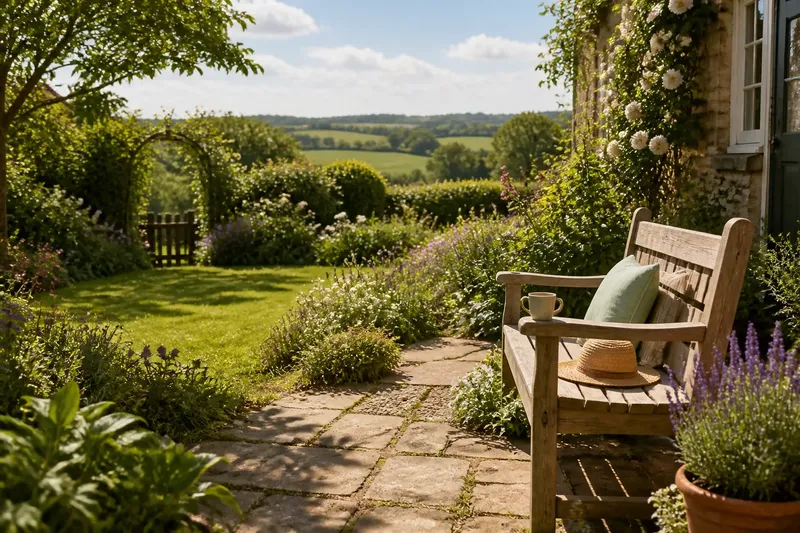
You carry a mug into the garden, sit on the bench beside the back door, and find yourself looking straight at the compost bins. A well-placed garden bench can change that small daily pause: not by adding another feature, but by giving the eye somewhere worth staying. The best position begins with the view you want to frame.
Rather than moving a heavy seat on a whim, spend a week noticing where you naturally stop and what you see from those places. This short routine helps you choose a spot that suits the garden’s changing light, its paths and the way you actually use it.
Notice where the garden already asks you to pause
On the first day, take an unhurried walk through the garden at the times you are most likely to sit outside. Bring a notebook and jot down places where you linger: beside a gate, under an apple tree, near a pond, or at the far end of a path. Note what draws you there. It might be birds at a hedge, the scent of herbs, or a view across the lawn.
Then look at the less obvious pauses. A sunny patch may be pleasant in the morning but exposed later; a sheltered wall may make a good seat on a breezy afternoon. Mark the spots with a cane or a small plant pot rather than hauling the bench around. The aim is to find promising positions, not to settle on one yet.
Keep the route to the seat in mind. A bench that requires crossing a muddy bed or squeezing past a shed may be admired from indoors and rarely used. A clear path is part of the invitation.
Choose the view before you choose the bench
On the second day, stand or sit at each marked spot and look in several directions. A useful outlook does not have to be grand. It could be a border where flowers open in succession, a view through an arch, or a glimpse of a familiar tree beyond the garden boundary. Ask what the seat would make easy to notice: movement, texture, a changing patch of light, or the shape of the whole garden.
Think about what you would rather not have centred in the view. A compost area may be useful but visually busy; a gate may draw the eye towards the road. Sometimes a slight turn of the seat is enough to include a favourite border and leave a utility area at the edge of sight. The bench need not face squarely into the garden.
Imagine you have a narrow garden with a washing line in the middle and a rose-covered fence at the far end. If you place a temporary chair by the side path and angle it towards the roses, the line recedes from the main view while the seat still feels connected to the house. That is the sort of small adjustment a trial can reveal.
Try the candidate spots through the week
On the third and fourth days, test the strongest positions with a folding chair or a sturdy garden chair. Sit for a few minutes at different times, and notice whether the view feels restful or busy. Check where the sun falls, whether you are squinting, and whether a passing path cuts across your line of sight. A spot that looks inviting while standing may feel exposed once you sit down.
On the fifth day, try the seat after a change in the weather if one occurs. A hedge, fence or building may offer welcome shelter, while a low hollow can feel damp underfoot. Notice whether the ground remains comfortable and whether you can reach the seat without stepping over plants. Avoid treating one pleasant afternoon as the whole story; a garden’s conditions shift with the day.
On the sixth day, return with something you might genuinely bring outside: a book, a cup of tea, secateurs or a small basket. The object helps you judge whether there is room to set it down and whether the seat suits a short pause or a longer sit. A bench beside a productive border may invite a different kind of use from one placed to watch the evening light.
Settle the position and make it feel at home
On the seventh day, compare your notes and choose the spot that best balances outlook, comfort and access. Place the bench where its main view feels deliberate, then check the approach from the house and the garden path. Leave enough breathing room around it for the seat to read as a destination rather than an obstacle. The exact spacing depends on the bench, paving and nearby planting, so follow the maker’s guidance where relevant.
Let the planting support the view without turning the bench into a stage set. A low clump of lavender or a pot of seasonal bulbs can soften the edge of a paved spot; a taller shrub placed beside, rather than directly in front of, the seat can make it feel sheltered. Keep the central outlook open enough to see what drew you there in the first place.
If the bench sits on grass, consider how its feet will meet the ground through wet weather. A firm, level surface can make sitting and standing more comfortable. For a paved area, check that the seat does not obstruct a route used for bins, tools or garden access.
How should the bench relate to the rest of the garden?
Should a garden bench face the house?
Not necessarily. Facing the house can make sense if you want to watch children, keep an eye on a doorway or enjoy the warmth of a wall, but a turn towards a border or tree may give the seat a more absorbing outlook.
Can a bench sit in a small garden?
Yes, if it does not block the main route or crowd the planting. A compact seat at the end of a path can draw the eye through a small space and make the far boundary feel like a place to visit.
Is shade or sun better for a garden seat?
Choose according to when you are likely to use it and how the garden feels at those times. A position with some shade may be welcome during bright hours, while a sheltered sunny corner can suit a quiet pause in cooler weather.
Should the bench be visible from indoors?
Visibility can help a seat feel connected to the house, especially when the garden is small or the bench is used often. It is not essential, though; a tucked-away seat can offer a quieter view if the path to it is clear and inviting.
Let the view keep changing
Once the bench is settled, give the position time to show its character. A view may be especially appealing when blossom opens, seed heads remain through autumn, or rain brings out the colour of a stone wall. If a new shrub gradually blocks the outlook, adjust the planting or turn the bench slightly rather than assuming the original position must stay fixed.
A well-placed garden bench is less about finding a perfect focal point than choosing what you want to notice during an ordinary pause. Keep the main search question in view—where to place a garden bench—and let your own daily route, preferred outlook and comfort decide the answer. Before fixing the spot, sit there once more with nothing to do but look around.