A Winter Porch, Ready for Muddy Boots
A winter porch for muddy boots works better when wet footwear, outer layers and a pause have separate places. Set up a calmer arrival routine.
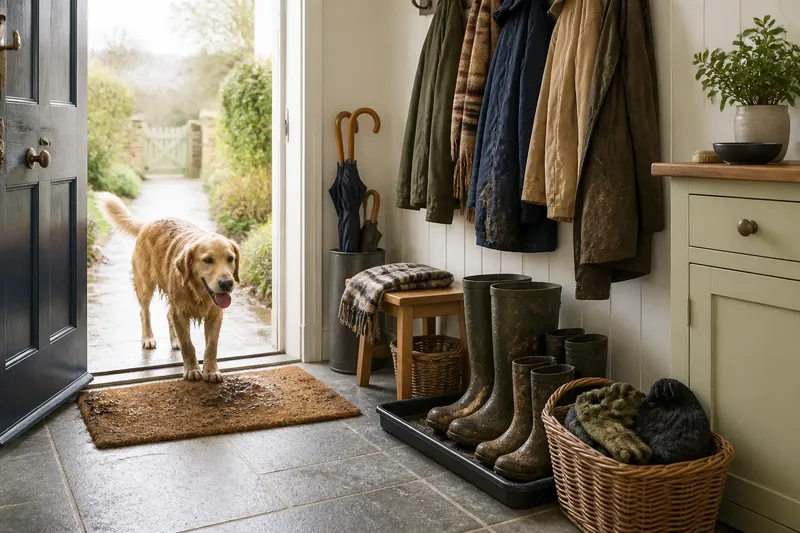
The dog comes in first, shaking rain across the tiles; muddy boots follow, then a dripping coat lands on the nearest chair. A winter porch for muddy boots can feel welcoming rather than crowded when each part of that arrival has a clear place to go.
The useful idea is not to add more storage at random, but to give damp footwear, outer layers and the brief pause after coming indoors separate spots. Work through the snags in the order they tend to appear: wet things at the threshold, clutter rising around them, then nowhere comfortable to stop.
Boots spread across the doorway because the landing spot is unclear
A single mat is often asked to do too much. It catches grit but may not contain water from several pairs of boots, and footwear left on its edge creeps into the walking line. The cause is usually a mismatch between the mat’s job and the amount of wet gear arriving.
Start by deciding where boots should stand before anyone takes them off. A sturdy rubber boot tray with a raised rim can hold damp soles; a coir mat just outside the door can catch loose dirt before it reaches the tray. Keep the route from the door to the house clear, and place the tray where the door can open fully without nudging it.
Say you have a narrow porch where two pairs of boots usually block the door. Imagine moving a slim tray against the side wall and placing the coir mat just outside the threshold; the expected result is a defined parking area that leaves the opening clear. If water gathers on the tray, empty it and let the surface dry rather than letting a puddle sit beneath the boots.
Choose a tray that is easy to lift and clean, not simply the largest one that fits. A shallow, manageable tray is more useful if it can be emptied without tipping dirty water across the floor.
Boots stay wet because air cannot reach them
A tray contains drips, but it does not dry footwear. Boots pushed heel-to-toe against a wall, or tucked beneath a pile of coats, can stay clammy because air has little room to move around them. The temptation is to hide the mess; the better answer is to leave a modest gap between pairs.
Set muddy footwear upright with openings facing out, and remove loose insoles if the maker’s care advice allows it. Let mud dry enough to brush away, then use a stiff boot brush beside the door so grit does not travel indoors. Avoid putting wet leather or other materials close to a stove, radiator or direct heat; rapid drying can damage some finishes.
If several people arrive at once, reserve the tray for the wettest footwear and keep dry indoor shoes elsewhere. That small distinction stops clean pairs from sharing a soggy landing area.
Coats and gloves form a damp pile because they have no drying order
Outer layers arrive in a jumble: a coat draped over a peg, gloves stuffed into a sleeve, scarf folded against a wet collar. Crowded hooks may seem like the culprit, but the deeper problem is that dripping items and nearly dry ones are being treated alike.
Give wet coats room on spaced hooks or a freestanding rail, with sleeves hanging free. Keep a washable cloth or small drip-catching mat beneath the hanging area if water tends to fall onto the floor. Put gloves and hats in an open basket rather than a closed box, and separate soaked items so air can circulate. A second basket can hold dry scarves and spare hats, keeping them away from damp fabric.
Check the label or maker’s care instructions before washing or drying specialist outerwear; materials and treatments differ. For ordinary muddy cuffs, a soft brush and a damp cloth may be enough once the mud has loosened, while a coat that needs more attention can be dealt with away from the busy doorway.
Keep the hooks at a comfortable reach for the household, but do not let long coats cover the boot tray. If the porch is too small for a rail, use fewer hooks and hang wet items with space between them rather than stacking them on one peg.
The porch feels like a thoroughfare because there is nowhere to pause
Taking off boots while balancing a bag is awkward. Without a place to steady yourself, people perch on whatever is available, often blocking the door or knocking into the coat hooks. The aim is a brief, stable pause, not a grand furniture arrangement.
A narrow stool or a small, firm perch can help with changing footwear, provided it does not narrow the route through the porch. Place it beside the boot area rather than directly in front of the door. A shallow basket nearby can catch a lead, keys or a folded cloth, but keep the top clear enough for a hand to rest on.
In a very small entrance, a wall-mounted rail with a sturdy handhold may be an option only if it is suitable for the wall and fitted correctly. For anything involving structural fixing, use an appropriate professional rather than improvising with uncertain supports.
Think about what the pause is for: removing boots, setting down a parcel, or helping a child with a zip. Keep only the useful support close at hand, so the perch does not become another shelf for things without a home.
What should a winter porch for muddy boots include?
Should boots go on a mat or in a tray?
A mat is useful for catching surface dirt, while a rimmed tray contains drips from wet soles. In a rainy entry, using both in sequence can keep grit outside and moisture in a place that is easy to empty.
How can a small porch handle wet coats?
Use a few spaced hooks rather than crowding every coat onto one peg, and keep a washable drip-catching layer beneath them. If there is no room for a rail, hang only the wettest items there and move dry outerwear to a separate cupboard.
Where should muddy boots dry?
Leave them upright with space around them in a ventilated spot, away from direct heat. Follow the footwear maker’s care advice, particularly for leather, treated fabric or specialist walking boots.
What belongs beside the door?
Keep the things used during arrival close: a boot brush, a cloth for drips, and a place for wet gloves. Store occasional-use items elsewhere so they do not crowd the clear route in and out.
Clutter returns when the porch has no reset point
A tidy arrangement can unravel after one busy afternoon if nobody knows where a damp glove or muddy lead should go. Give each category a visible destination: footwear in the tray, wet coats on open hooks, small damp items in an airy basket, and dry accessories in their own container. Labels are optional; the arrangement should make sense at a glance.
Build a quick reset into the moment after the weather clears. Empty standing water, brush loose grit from the mat, and move items that have dried back to their usual storage. Do not turn the porch into a utility room full of cleaning supplies; keep only the brush and cloth needed for the next arrival.
Seasonal changes may call for a different arrangement. When heavy rain gives way to frost, for example, the tray may still earn its place while the basket shifts from gloves to hats. The winter porch for muddy boots works best when its spots respond to what the household actually brings in, not to a fixed display.
Before the next wet walk, stand at the door and check the route: can it open, can someone pause without blocking it, and is there a clear place for each damp layer? A small adjustment now—moving a tray or freeing a hook—can make the next arrival feel less like a negotiation with the weather.